As of 22 Nov 2026 · Comparison page · Information on Vergabescanner from public pages on vergabescanner.de, Scalera details taken from its product pages and FAQ. Prices, plans, marketing figures and customer quotes are left out here for both providers.
At a glance
- Vergabescanner (Bochum, Germany) reads bills of quantities, answers eight questions before pricing and produces a referenced preliminary calculation for trade and construction firms (vergabescanner.de).
- Scalera (developed in Zurich) helps manufacturers, dealers and general contractors in Europe assign BoQ items to their own catalogue (product page).
- Bottom line: the tools sit at different points of the same chain. Vergabescanner helps the bidding firm calculate, Scalera helps the supplying company match.
Sources: vergabescanner.de, scalera.ai, retrieved 22 Nov 2026.
One BoQ, two stations in the chain
An example: a district council tenders the refurbishment of a sports hall, lot ventilation. A ventilation contractor reads the BoQ, checks whether it meets the suitability criteria and works out materials, working time and mark-ups for each item. For the materials it needs prices and suitable units from a manufacturer or dealer.
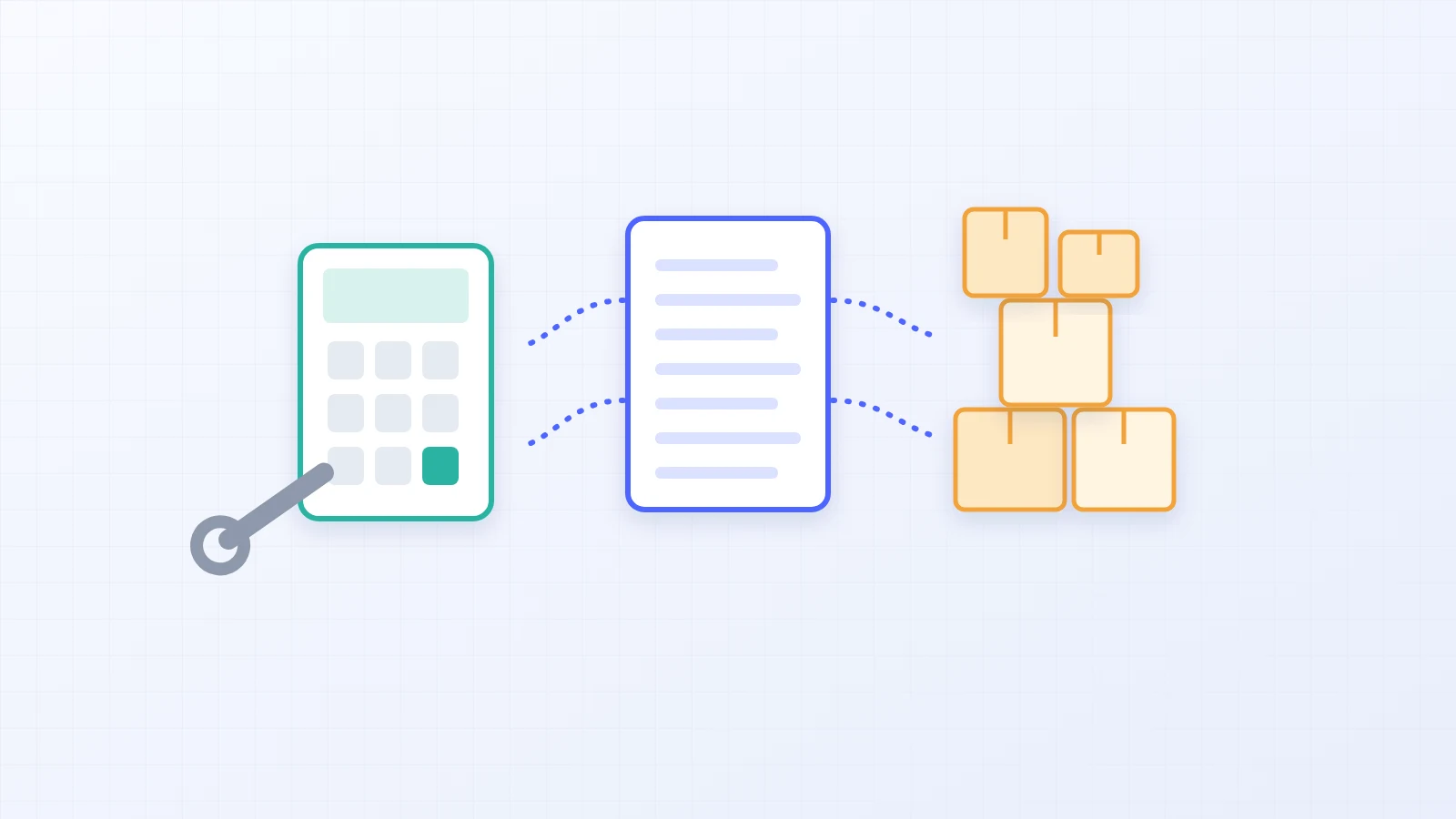
The same BoQ then lands a second time at the manufacturer. There the question is not how long installation takes, but which unit, which duct and which accessories from its own range fit each item. Vergabescanner starts at the first station, Scalera at the second.
How Vergabescanner describes its offering
Vergabescanner names trade and construction firms with 5 to 50 employees as its audience, from sole master craftsmen to mid-sized contractors (home page). The website describes:
- 20 trades: from metalwork, electrical and HVAC/plumbing to scaffolding and lifts, each with its own recognition logic and price profile (trades).
- Eight mandatory fields: summary, suitability, exclusion, evaluation, risks, recommendation, contracting authority and budget, each answer with a verbatim quote from the original (features).
- Calculation: each item is broken down into materials, labour time and ancillary work, based on stored material prices, hourly rates and mark-ups; unclear items get a review flag (features). According to the home page, calculation data can also be imported via DATANORM (home page).
- Search and workflow: tenders from more than 11 sources, from TED through federal level and all 16 German states to municipalities, plus a suitability check with a go/no-go recommendation, an offer as a DIN 5008 PDF, a pipeline board and a deadline calendar (features, tenders).
According to the home page, data is hosted in Germany, and there is also an Android app (home page).
What Scalera describes
Scalera puts the supplier side first: items are compared with the product catalogue by specification, application and standard, not just by keywords (product page). The table summarises what the product pages and FAQ state.
| Step | What Scalera states | Source |
|---|---|---|
| Find | Radar with filters for region, procedure, deadline, authority, codes | Radar |
| Adopt | Result becomes a project, then the BoQ is read and matched to the catalogue | Radar |
| Match | Suggestion with rationale and AI confidence, missing accessories | Product page |
| Documents | GAEB, NPK, ÖNORM, PDF and scan, Excel, XML, email | FAQ, Product |
| Handover | ERP, CRM, PIM via SAP IDoc, REST API or custom format | FAQ |
The table describes Scalera only. Which formats apply in which country is explained in GAEB, ÖNORM, NPK compared.
Where the two touch
We name the common ground openly: both read BoQs as GAEB files and as scanned PDFs, both make their results traceable (source quotes at Vergabescanner, rationale and confidence at Scalera), and both help with finding public tenders and with the question of whether a bid is worthwhile. On the bid question, see bid or no bid.
The main difference is the output. Vergabescanner delivers a calculation with labour time and mark-ups up to the cover letter. Scalera delivers a product match; according to the FAQ, price calculation remains in the company's ERP or CRM.
We also state the gaps for both: NPK, ÖNORM, languages other than German and an ERP connection are not described on the Vergabescanner pages we reviewed. Labour time calculation, price profiles per trade and a deadline calendar are not described on the Scalera pages we reviewed (as of 22 Nov 2026).
Four questions for your decision
- What is your role in the project? If you submit a bid yourself as a trade contractor, calculation comes first. If you supply products to bidders, matching to your catalogue comes first.
- What should the end result be? A calculation with materials, labour and mark-ups is something different from a product list with article numbers that your ERP processes further.
- Which countries do your BoQs come from? Only German procurement portals, or also Switzerland and Austria with NPK and ÖNORM and in other languages? Background is in the guide to TED and CPV.
- How will you measure the benefit? Take two or three completed tenders, have them processed and compare matches, corrections and time spent with your current approach; the pilot guide shows how.
Whoever bids prices labour and materials. Whoever supplies looks for the right product. Both start with the same BoQ.
If your choice is rather between finding and processing tenders, read Scalera vs. Tritolo. To see how your catalogue responds to a real BoQ, bring one to the demo.
Frequently asked questions
Is Vergabescanner an alternative to Scalera?
Only in part, because the two serve different use cases. Vergabescanner describes itself as AI calculation for the construction trades, that is, for firms that submit a bid themselves (vergabescanner.de). Scalera describes matching BoQ items to the catalogue of manufacturers, dealers and general contractors (product page). What they share is reading tender documents and searching for public contracts.
Could one company need both tools?
This is conceivable mainly along a supply chain: an installer prices its bid, while a manufacturer or dealer matches the same items to its products. How dealers support partners on tenders is covered in tenders in partner networks. Only a test with your own documents shows which combination fits you.
Which documents do the two read?
Vergabescanner lists PDF (including scans), Word, Excel and CSV, GAEB X81 to X86, images, XML and plain text (features). Scalera lists PDF (scanned and digital), GAEB, Excel/CSV, XML and emails (FAQ) as well as NPK and ÖNORM (product page). NPK, ÖNORM and languages other than German are not described on the Vergabescanner pages we reviewed (as of 22 Nov 2026).
Do both help find public tenders?
Yes. Vergabescanner aggregates federal, state and municipal tenders from Germany including TED and filters by trade, source, postcode with radius and deadline (tenders, features). The Scalera Tender Radar filters by region, procedure, deadline, contracting authority and codes and adds results as projects. Basics on portals and CPV codes are in finding public tenders.
Where do the two providers come from, and where is data hosted?
According to its legal notice, Vergabescanner.de is run by a sole proprietorship in Bochum, and it states hosting in Germany (home page). Scalera's software is built in Zurich; the FAQ names European data centres and servers certified to DIN ISO/IEC 27001 and 27018 (FAQ).