As of 25 Nov 2026 · Comparison page · CATHAGO details come from its public pages on cathago.de (German only), Scalera details from scalera.ai. We list no prices and no customer quotes for either provider.
In short
- CATHAGO (Berlin) is AI software for construction companies: ordering via app, digital delivery notes, invoice checks against order and delivery note, hand-over to the ERP (homepage).
- Scalera (developed in Zurich) matches the lines of incoming BoQs and orders to the manufacturer's or dealer's own catalogue (product page, order processing).
- Bottom line: CATHAGO sits with the buyer and covers the documents around the order. Scalera's core products sit with the seller and start when a request needs to become a quote or an order needs to become a sales order.
Sources: cathago.de, scalera.ai, retrieved 25 Nov 2026.
One supply relationship, two desks
Take a shell-construction firm that needs clay bricks and mortar for a school building. On its side, purchasing asks for prices, the site foreman places the order, and accounting checks the invoice later.
On the other side is the building-materials dealer or manufacturer. The BoQ and later the order arrive there. Inside sales has to map every line to an item, price a quote and get the order into the ERP.
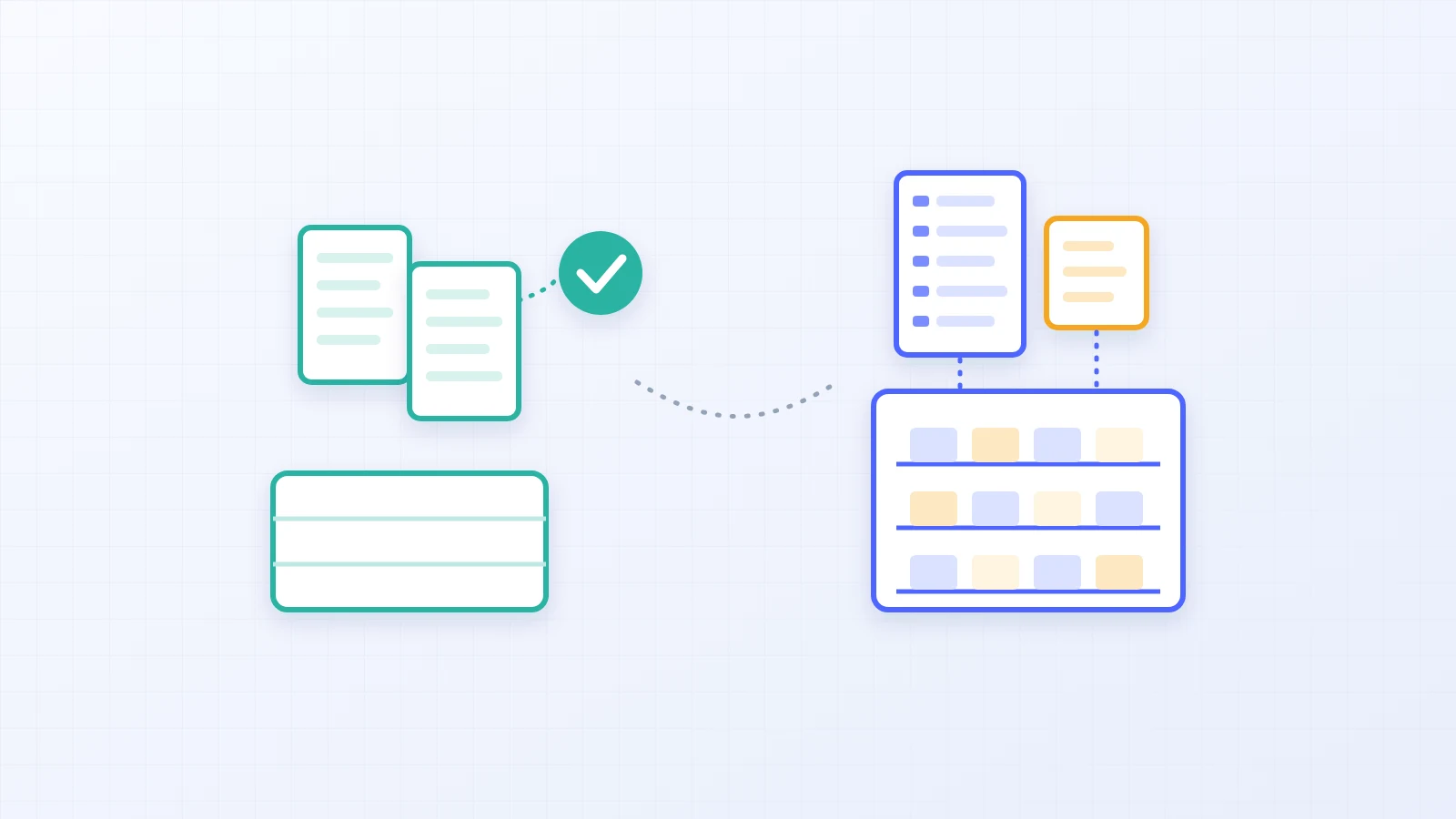
CATHAGO describes itself as a tool for the first desk. Scalera's product matching and order processing belong at the second. In these steps the tools do not replace each other; they meet at the same order.
What CATHAGO describes
CATHAGO names three core modules, ordering, digital delivery notes and invoice checking, and its own AI for delivery notes, order confirmations and invoices (about CATHAGO). The website shows:
- Ordering: framework agreements and annual prices, supplier catalogues from Excel to BMEcat, punch-out shops via OCI and an ordering app for the site (ordering).
- Delivery note: capture paper delivery notes by photo, receive digital ones and sign off deliveries in the app (delivery notes).
- Invoice checking: PDF, ZUGFeRD and XRechnung; matching against order, order confirmation, delivery note and price list, which CATHAGO calls a 5-way match (invoice checking).
- Tendering (new): price requests for materials and subcontractor work, a bid comparison per line, awarded prices passed into ordering; public tenders where you bid yourself are explicitly not meant (tendering).
- Systems: NEVARIS, BRZ, RIB iTWO, DocuWare and an MCP server (integrations); suppliers via EDI or API (supplier network).
The CATHAGO pages we checked do not describe handling incoming BoQs on the supplier side, tender formats such as NPK or ÖNORM, or interfaces in other languages.
What Scalera describes
Scalera starts where a document reaches the supplier. A BoQ is split into lines and each line gets a suggested item from your catalogue (product page). An order sent as PDF, Excel, email or photo is matched the same way and handed to the ERP as a sales order (order processing).
| Step | What Scalera states | Source |
|---|---|---|
| Read BoQ | GAEB, NPK, ÖNORM, PDF, scan, Excel | Product page |
| Find items | Suggestion per line with reasoning and AI confidence | Product page |
| Orders | PDF, Excel, email, photo; staff check uncertain lines | Orders |
| Requests | Lines to manufacturers, quotes side by side | Supplier matching, Quotes |
| Hand-over | SAP IDoc, REST API, free format | FAQ |
The table describes Scalera only. How to read a bid comparison with outliers is covered in Bid tabulation outliers.
Where the two overlap
The overlap sits before the award, on the contractor side. With the tendering module marked as new on its website, CATHAGO offers price requests to suppliers with a bid comparison (tendering). Scalera also lets contractors send BoQ lines to manufacturers, request quotes and set offers side by side line by line (supplier matching, quote comparison).
If this step is all you need, look at both. One difference according to the two websites: in CATHAGO, awarded prices flow on into ordering and invoice checking; in Scalera, the focus is the BoQ itself, mapping its lines to suitable manufacturers.
We name the gaps on both sides: the Scalera pages we checked do not describe delivery notes or invoice checking. The CATHAGO pages we checked do not describe handling incoming BoQs and customer orders at the supplier (as of 25 Nov 2026).
Four questions to place your need
- Are you buying or selling? A contractor that wants to digitise orders, delivery notes and invoices in its own purchasing is looking for something different from a manufacturer or dealer whose inside sales team retypes BoQs and customer orders.
- Where does it stall: before or after the award? Missing prices and slow quotes are a different problem from missing delivery notes. For your role in a tender, see also Scalera vs. Comstruct.
- Which formats and countries? If tenders reach you as NPK from Switzerland or ÖNORM from Austria, check which tool names these formats explicitly (product page).
- How will you test? Use real documents: ten orders or three closed BoQs, and measure corrections and time. For orders, see Order processing automation in building materials.
The same order has two ends. Pick the tool for the end you sit at.
Another comparison with a different focus is Scalera vs. Conexiom on orders at the manufacturer. To see Scalera work with your catalogue and a real BoQ, book a demo.
Frequently asked questions
Is CATHAGO an alternative to Scalera?
Only in one area. Both offer contractors a price request to suppliers with a bid comparison (CATHAGO tendering (German); Scalera supplier matching, quote comparison). The focus on delivery notes and invoice checking is CATHAGO's alone; handling incoming BoQs at the manufacturer or dealer is Scalera's alone (product page).
Who is CATHAGO for?
CATHAGO names construction companies as its audience and addresses purchasing, accounting and the site team there (homepage (German)). According to CATHAGO, construction companies from Germany, Austria and Switzerland use it (homepage).
Which systems does CATHAGO work with?
Its integrations page lists NEVARIS, BRZ and RIB iTWO, as well as DocuWare and an MCP server (integrations (German)). Suppliers can send delivery notes and invoices via EDI or API; for paper, an AI reads the document (supplier network (German)). Scalera hands results to ERP, CRM or PIM via SAP IDoc, REST API or a freely configurable format (FAQ).
Can a dealer run into both at once?
Yes, as the counterpart. When a contractor using CATHAGO sends you a request or an order, it reaches you as the supplier. What happens next in sales, matching the lines and creating a sales order in the ERP, is the part Scalera describes (order processing).
Where are the two providers based?
CATHAGO is operated by CATHAGO Technology UG (haftungsbeschränkt), based in Berlin and founded in 2021 (imprint (German), about CATHAGO (German)). Scalera is developed and supported in Zurich and uses European data centres (FAQ).
Sources, as of 25 Nov 2026
- CATHAGO, homepage (German)
- CATHAGO, tendering (German)
- CATHAGO, ordering (German)
- CATHAGO, delivery notes (German)
- CATHAGO, invoice checking (German)
- CATHAGO, integrations (German)
- CATHAGO, supplier network (German)
- CATHAGO, about us (German)
- CATHAGO, imprint (German)
- Scalera product page (product matching)
- Scalera supplier matching
- Scalera quote comparison
- Scalera order processing
- Scalera FAQ