In short
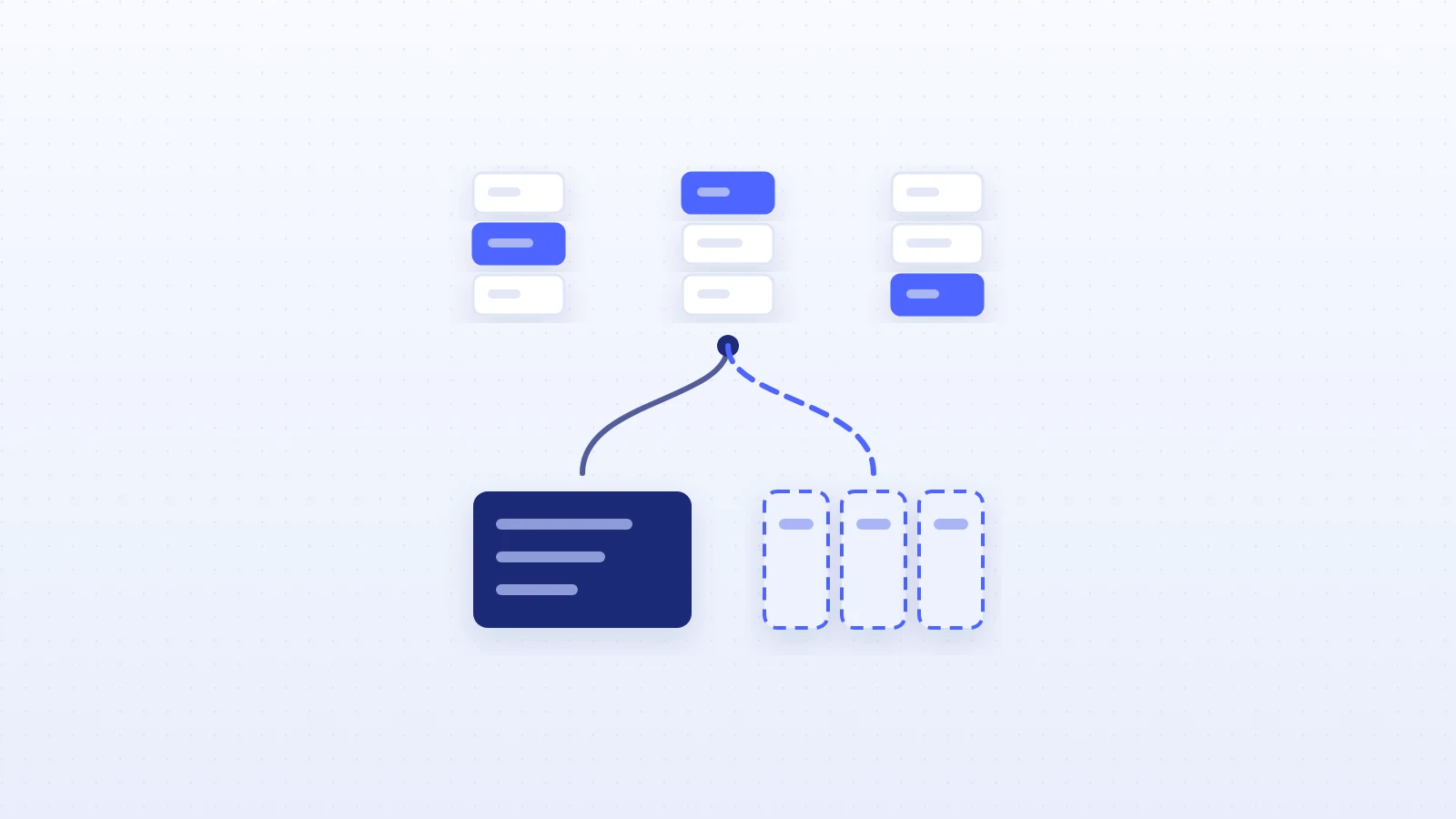
- An award scenario is one possible way to split the contract between bidders: everything to one, one bidder per lot, or each item to the cheapest bidder.
- The total of a scenario depends on bidder conditions, such as a discount that only applies to a single award.
- Splitting adds costs for coordination, deliveries and interfaces that do not appear on the bid tabulation.
- Public buyers are bound by lot rules: in Germany Section 97a GWB and Section 30 VgV, in Austria Section 28 BVergG 2018, in Switzerland Art. 32 BöB.
As of 28 Nov 2026. Lot rules from GWB, VgV, BVergG 2018 and BöB checked word for word. Not legal advice.
What is an award scenario on a bid tabulation?
One possible answer to the question of who gets which part of the contract. The bid tabulation shows every bidder's price per item. A scenario adds those prices up into one total for a specific split.
Three basic forms come up in every comparison:
- Single award: one bidder receives all lots or items.
- Award by lot: one bidder wins each lot, for example per trade or construction phase.
- Best price per item: every item goes to the cheapest bidder. This is also called cherry picking.
How to make the prices themselves comparable is covered in the guides to line-by-line bid comparison and to outliers on a bid tabulation. This guide covers the next step: choosing a split once the prices are comparable.
How do you set scenarios side by side in a bid comparison?
In five steps, and only once the bid tabulation is cleaned up. Otherwise you compare scenarios built on wrong numbers.
- Build a cleaned-up total per bidder and lot from the bid tabulation.
- Record the conditions of each quote: discount for a single award, prices valid only if all items are ordered, minimum quantities.
- Set up the scenarios: best single bidder, best price per lot, and every combination for which a bidder offers a discount.
- Add your own allowance for interfaces to each scenario, such as extra coordination or deliveries.
- Check whether the ranking holds if a condition drops away or an allowance turns out higher.
Worked example (fictitious): refurbishing a school
Three lots: windows, solar shading and interior doors. Bidder A prices all three lots at €454,000 (windows €240,000, solar shading €96,000, interior doors €118,000) and grants a 3% discount if it wins all three. Bidder B prices only the windows, at €228,000. Bidder C prices all lots at €452,000, including solar shading at €89,000 and interior doors at €112,000.
| Scenario | Total | Note |
|---|---|---|
| All to A | €440,380 | incl. 3% discount, all lots only |
| All to C | €452,000 | no discount |
| Best price per lot | €435,000 | B: windows, C: rest, incl. €6,000 interfaces |
Calculation: 454,000 × 0.97 = 440,380. 228,000 + 89,000 + 112,000 = 429,000, plus 6,000 = 435,000. All figures invented.
On paper, the split wins by €5,380 over the single award to A. That only holds if C keeps its prices for solar shading and interior doors without the windows.
What happens if a bidder ties its prices to all lots?
Then that scenario falls away, and the ranking can flip. If C's prices only apply to an award of all lots, the only split left is B for the windows and A for the rest. A then prices without the discount: €228,000 plus €96,000 plus €118,000 plus €6,000 comes to €448,000. The single award to A is now the cheapest scenario.
So clarify such conditions in writing with every bidder concerned before you decide. A scenario with unclarified conditions is an assumption, not a basis for an award.
The lowest price per item is a scenario, not a decision. Only conditions and interfaces turn it into an award.
Which costs does the best price per item not show?
The costs that the split itself creates. They are in no quote, so you have to estimate them yourself. Check these points for every split scenario:
- Coordination: more contractors means more alignment on dates, quantities and handovers.
- Delivery and freight: every supplier charges its own freight and its own small-quantity surcharges. The guide to discounts, early payment and freight shows how to make freight comparable.
- Interfaces on site: where two trades meet, such as windows and solar shading, it must be clear who supplies which connections.
- Warranty: when a defect sits at an interface, the question is which contractor is responsible.
- Dependencies: if one contractor drops out or runs late, other lots depend on it.
Put an amount on these points from your own experience and note how you arrived at it. An allowance of zero is an assumption too and needs the same justification.
Can you accept only part of a quote?
Only with the bidder's agreement. The quote is the offer, your reply is the acceptance. Under German law, an acceptance with restrictions counts as a rejection combined with a new offer (Section 150(2) BGB). If you accept only some of the items, the contract is only formed once the bidder accepts that new offer.
So state in your request that you reserve the right to award by lot or by item, and ask for prices that also apply individually. The purchase order vs. quote checklist shows how to check differences between quote and order. Other countries have their own rules on contract formation.
Which lot rules apply to public contracts?
Public buyers publish the lot split and the permitted combinations in the contract notice (Section 30(2) VgV, Section 28(3) BVergG 2018). For bidders, this means the possible scenarios are set out in the tender documents.
In Germany, the lot principle has been set out in Section 97a GWB since 1 July 2026. It was introduced by the Act to Accelerate the Award of Public Contracts (Federal Law Gazette 2026 I No. 137). What is new is the exception for reasons of time for certain infrastructure projects from twice the EU threshold.
| Country | Rule | For scenarios |
|---|---|---|
| DE: Section 97a GWB | Quantity and trade lots are the principle | Single award if reasons require it |
| DE: Section 30 VgV | Bids per lot, lot limits, combinations | Combination if reserved in advance |
| AT: Section 28 BVergG 2018 | Single award or lots, tender both | No award of parts of the whole |
| CH: Art. 32 BöB | Overall bid, lots possible | Partial award if reserved |
Simplified overview as of 28 Nov 2026. The wording of the linked statutes is binding.
In Germany, Section 30 VgV governs public supply and service contracts above the EU thresholds, which includes pure deliveries of building materials. It does not apply to works contracts; for those, the ordinance refers to the VOB/A (Section 2 VgV). A buyer can award contracts for several or all lots to one bidder if it reserved this option in advance and named the lots that can be combined (Section 30(3) VgV).
In Austria, the buyer must design the tender so that bidders can form lot prices. A joint award of several lots to one bidder also requires that it is more economical than separate awards (Section 28(3) and (5) BVergG 2018).
How price is weighed against other criteria in public procedures is covered in the guide to award criteria.
What should manufacturers and distributors put in their quotes?
If your quote can be split, price every item so that it stands on its own. Or state clearly under which condition your price applies.
- State explicitly whether your prices also apply if only some items or lots are awarded.
- Offer a discount for the single award separately from the unit price, so your customer can calculate both scenarios.
- Show minimum quantities and freight per delivery, so a split does not quietly fall below your costing.
- In public tenders, the documents decide on lots and combinations. An alternative solution belongs in an alternative bid, not in a condition.
If you are a general contractor collecting quotes from subcontractors, level the scope before you compare scenarios. The guide to subcontractor bid leveling shows how.
How do you record the chosen option?
With a small scenario table: for each scenario, the total, the conditions, your interface allowances and the bidders' answers to your questions. Add one sentence on why you prefer the chosen scenario.
This table belongs in the award recommendation. That way anyone can later follow why the lowest price per item did or did not win.
Where does Scalera help with award scenarios?
With the basis on which you calculate scenarios. Scalera reads every incoming quote itself. The bid tabulation then shows all bidders' prices item by item along your bill of quantities. If a bidder is missing an item, you see the gap at once, and outstanding quotes get automatic reminders (Quote comparison).
So that requests reach the right companies, Scalera matches each bill of quantities item to suitable manufacturers or subcontractors (Supplier matching). Your team decides which split to award.
Frequently asked questions on award scenarios
What is the difference between a quantity lot and a trade lot?
A quantity lot (Teillos) splits work by volume, such as two construction phases. A trade lot (Fachlos) splits it by type or trade, such as windows and solar shading (Section 97a(1) GWB).
Can a bidder bid for individual lots only?
The buyer decides. In Germany, the buyer sets whether bids are allowed for one, several or all lots (Section 30(1) VgV). In Switzerland, bidders may bid for several lots unless the tender says otherwise (Art. 32(3) BöB).
What is a lot limitation?
A maximum number of lots that a single bidder can win. Germany (Section 30(1) VgV), Austria (Section 28(3) BVergG 2018) and Switzerland (Art. 32(3) BöB) allow it. In Germany and Austria, the buyer then states in advance the rules it will use to allocate the lots.
When does a single award make sense despite a higher price?
When uniform execution and clear warranty responsibility outweigh the price difference. Austrian procurement law names exactly these aspects for choosing between a single award and lots (Section 28(1) BVergG 2018).
Do lot rules also apply to private clients and general contractors?
The rules cited here are addressed to public buyers. In private purchasing, you choose how to award. One exception: if a public buyer entrusts a company with a public task, it obliges that company to follow the lot principle when subcontracting (Section 97a(5) GWB).
How many scenarios should you calculate?
At least three: the best single bidder for everything, the best price per lot, and one scenario that includes all bidder conditions. More are worth it when bidders offer discounts for specific combinations.
Does Scalera calculate award scenarios automatically?
No, your team chooses the combination. Scalera provides the basis: incoming quotes sit side by side, item by item, on the bid tabulation, and gaps stand out at once (Quote comparison).
Key takeaways
- Calculate scenarios only on a cleaned-up bid tabulation.
- Compare at least three scenarios: best single bidder, best price per lot, and one scenario with all conditions.
- Conditional discounts and prices valid only for a single award can reverse the ranking. Clarify them in writing.
- Estimate coordination, delivery and interface costs yourself, because they are in no quote.
- In public contracts, lots and permitted combinations are set out in the contract notice. Only calculate scenarios the documents allow.
Next steps
Take your next award with several lots and set the three basic scenarios side by side before you negotiate. A demo shows how Scalera brings requests, responses and the bid tabulation together for that basis.
Note: Scalera publishes this guide. All figures in the scenario example are invented. The linked statutes and the relevant tender documents are binding; this guide does not replace legal advice.
Sources
- Germany: Section 97a GWB, lot principle, Section 30 VgV, division into lots, Section 2 VgV, award of works contracts and Section 150 BGB, late and modified acceptance, gesetze-im-internet.de, accessed 28 Nov 2026
- Germany: Act to Accelerate the Award of Public Contracts, Federal Law Gazette 2026 I No. 137, Art. 1 and Art. 15, recht.bund.de, accessed 28 Nov 2026
- Austria: Section 28 BVergG 2018, single award or award by lot, RIS, accessed 28 Nov 2026
- Switzerland: Federal Act on Public Procurement (BöB), SR 172.056.1, Art. 32, as of 1 January 2026, Fedlex, accessed 28 Nov 2026
- Scalera, Quote comparison and Supplier matching, accessed 28 Nov 2026